Showing posts with label alumni. Show all posts

Saturday, November 7, 2015

“Accentuating Architecture: A Dordt College Architectural Alumni Exhibition”


Photograph by versluis ©2015

Dordt College is hosting its first design show in the Campus Center Art Gallery. The exhibit, titled “Accentuating Architecture: A Dordt College Architectural Alumni Exhibition”, will be displayed October 9 – November 9. Exhibit curator John Den Boer will deliver a gallery talk at 4:00 during the show’s reception from 3:45 to 4:45 p.m. on October 24.

Art Professor David Versluis, advisor for the pre-architecture program and art gallery coordinator, will be arranging the gallery installation. The exhibit will feature the architectural designs of:

Versluis says that the role of architects in the design of buildings is mainly “to study, research, imagine, solve problems, and give instructions.” This exhibition focuses on the finished work and shows the final built form with renderings, photographs, and floor plans. Included with each project are didactics describing the project program and design strategy.

The exhibition, celebrating 60 years of Dordt alumni during Dordt’s 60th anniversary year, also aims to help viewers consider why buildings are the way they are. The projects displayed in the exhibition demonstrate architectural design on various levels. Versluis and Den Boer hope the show fosters a deeper appreciation for the built environment and gives viewers a better idea of the role of the architect.

“Architecture means many things to many people,” says Den Boer. “Many see it as the intersection of art and science. It is a profession that concerns itself with community and inspiring people to be the best versions of themselves while simultaneously focusing on getting the smallest of details right. Architects have a duty to design functional, practical, but also beautiful buildings. Likewise, Christian architects have a duty to serve others and glorify God.”

Information taken from the Dordt College News Release.

Read More......

Thursday, August 18, 2011

Dordt Alumni in Design: Taylor Van Kley


Portfolio: 2011 Catalog Cover


ICS (Iowa Cutter Supply) Logo Ideas


Truck Trailer Graphics

We recently asked Taylor Van Kley to be featured as a Dordt alumni working in design. Taylor kindly submitted the following:

I graduated in May of 2005 with a B.A. in Art: Graphic Design. I worked at KSOU Radio before landing my current job at Kooima Company® in February of 2007. Kooima Company is a manufacturing plant located in Rock Valley, Iowa. About 120 people are employed there. One side of their business deals with laser cutting and metal fabricating, and the other side makes agricultural replacement parts. I am the only graphic designer at Kooima Company, so I do designs for both sides of the company even though I am considered a member of the Ag Department.


I use a variety of programs, including the Adobe Creative Suite 5, QuarkXPress, iMovie, and more to make flyers, catalogs, brochures, business cards, signs, semi trailer graphics, and anything else they need designed. The Ag catalog is probably the most time consuming project that I work on. I also do photography and videography for the company. Kooima has two websites, one of which I designed from scratch with HTML. Here’s a link to the website for the laser cutting/job shop side. The Ag Department has their own website and I keep the Ag site updated using a built-in content editor.


Last year, Kooima Company helped another ag business get started. The new business is known as Iowa Cutter Supply, a supplier of used forage harvester parts. I was able to make some designs for them, including a logo (shown above).


Outside of work, I recently finished a new website for my home church (Central Reformed Church in Sioux Center, Iowa). The pastor told me to keep it simple, so that is what I did. You can see it here: www.centralreformed.org. If you would like to see more of my work, please see my portfolio. The site contains a few additional and interesting side projects.

Read More......

Friday, February 11, 2011

“Print + Environmental Graphic Design” — a presentation by Sarah Franken


Photograph of Sarah Franken beginning her presentation. Photograph by versluis © 2011

On Wednesday 9 February a group of us from the AIGA Dordt student group gathered to participate in the presentation by Dordt College alumna Sarah Franken. Sarah’s topic conveyed her experiences working since graduating from Dordt as an Environmental Graphic Designer.

The web site for the Society for Environmental Graphic Design (SEGD) describes Environmental Graphic Design this way:

Environmental Graphic Design embraces many design disciplines including graphic, architectural, interior, landscape, and industrial design, all concerned with the visual aspects of wayfinding. [In addition,] the SEGD is the global community of people working at the intersection of communication design and the built environment and dedicated to communicating identity and information, and shaping the idea of place.
Dordt’s adjunct instructor in web design, Matt Van Rys, graciously provided notes on Sarah’s presentation, which we are publishing here:

Sarah Franken is a gifted graphic designer with unique experience in exhibition design.

Sarah is a 2006 Dordt graduate. While at Dordt, Sarah spent the spring semester of her junior year attending Chicago Semester; looking for some interesting experiences in the big city, being a small town Sioux Center native. Many art students at Dordt who use this opportunity gain excellent experience. Shortly after graduating, Sarah began working as a full time member of the Field Museum’s Exhibition Department in the Graphic Design division.

Sarah’s work as a member of The Field Museum design team had special emphasis on gallery/exhibition environmental design. The Field Museum is part of Chicago’s Museum Campus, which includes The Field Museum, the Adler Planetarium, the Shedd Aquarium and Soldier Field. This is an active area, full of tourists, located along the shore of Lake Michigan.

Sarah shared some of the process of exhibition design. One of the main components is to understand the hierarchy of information. The curators, 3D designers and graphic designers are all responsible for maintaining this hierarchy. The hierarchy usually begins with the entrance to the exhibition, the “attractor area,” to draw visitors in. The entrance often includes a signpost of information that is repeated later in the exhibition when the visitor transfers from one gallery to another, within the overall exhibition. Changing galleries also involves other visual shifts, such as carpet color or changing other graphic elements. In addition, the planning process involves figuring out what the voice of the exhibition needs to be.

Sarah described what an exhibition team would consist of: a project manager, 3D designer, graphic designers, production manager (budget and building), developers (information/writing), builders, media team (web, video and projections); about 10 people, give or take. This group of people can end up working together anywhere from 1 to 3 years depending if an exhibition is temporary or permanent or on the size and complexity of an exhibition. Once the donors, curators, researchers and other planning parties determine the direction of the exhibition, the team begins concepting the 3D space. Using the hierarchy of information they begin the designing. Sarah mentioned that quite often much of the graphics come together in the last six months before the installation and opening of an exhibition. In addition, the graphics department is heavily involved with the additional printed and web collateral for promoting the exhibition. When she started out in exhibition design, her job consisted of about 80% production work, 20% design. But Sarah notes that this is key for building the skills to be a technically stronger designer. She suggests that if you have an internship opportunity, use your time to learn by asking questions and by being a polite nuisance.

Sarah expressed that one of the rewarding parts of exhibition design is sifting through the information while designing and then ultimately watching the visitors interacting with the exhibition; absorbing, learning and sharing with the artist and the museum. Other highlights include working with large format printing and unique substrates, working with show installers and suppliers and understanding how lighting a 3D space, such as a gallery, vastly changes the impact of the space and how the visitor perceives it.

Although Sarah doesn’t work at The Field Museum anymore, she recently began working for the Science Museum of Minnesota designing exhibitions for various institutions around the country.

Some of the exhibitions Sarah designed:

In March 2007, “The Ancient Americas” permanent exhibition opened. This was the first major exhibition Sarah worked on for the Field Museum. Permanent exhibitions are a big deal, as they often take 2-4 years of work by the design team and are kept in the museum for several years, sometimes up to 20. For “The Ancient Americas,” Sarah was primarily a production designer, taking direction from her Lead Designer, working up the graphics within the established structure.

The next large exhibition Sarah worked on was “The Aztec World”. Sarah was involved from the beginning as co-designer and played a key role in determining the overall design of the exhibition and branding elements. One of the key elements of the design was a signature color, turquoise. This color was used to it’s largest impact by creating a 45 ft wide Styrofoam “slab” of turquoise at the entrance to the gallery.

Sarah’s first solo exhibition as Lead Designer was an exhibition of The Field Museum’s Chinese Rubbings collection, called “Lasting Impressions”. The Field Museum’s collection is the largest and best outside of East Asia. One of the challenges of this exhibition was presenting the rubbings in a budget-friendly way that would allow them to be rolled up and stored later. The solution was a large acrylic frame, creating shadow boxes with magnets holding the rubbings in place.

To see examples of Sarah’s superb print design and exhibition design, visit her on-line portfolio.

Read More......

Friday, October 29, 2010

Dordt Alumni in Design: Janna Rohde (Hofmeyer)


From posters (above) to selected examples of various print work by Janna Rohde. These pieces indicate, nicely, the diversity of her portfolio.

I graduated from Dordt in 1996 (hard to believe it has been that long!) as an Art major with an emphasis in Graphic Design. In college, I began as an intern at Demco Printing in Boyden, Iowa, and I am still here 14 years later. In those 14 years the graphics field has changed considerably. It is hard to imagine Adobe Photoshop started without layers, we didn’t have the internet, and we worked on computers that were so incredibly slow.

The best part about my job is the variety of work I get to do. We have five of us that work in Pre-press, each contributing a different specialty. Mine is doing most of the design-work. Our print shop is very diverse and therefore brings in many different kinds of jobs. I get to work on anything from 800 page catalogs to wedding announcements. The fast-paced work environment makes everyday a challenge and interesting.

Some of the jobs I receive are basically ready-to-go. For these jobs the important part is making sure it is set up correctly for the press and for bindery. Everyone works together to make the jobs run smoothly. I am fortunate to work in a print shop that keeps up on the latest technology. We are continually being trained on upgrades in equipment. It is fun to look back and see how the technology has changed in many ways such as from film to direct-to-plate.

Other jobs need designing from start to finish. I have designed several posters for high school teams, many brochures for businesses, business cards, posters, postcards, catalogs, many covers, product labels, calendars, invitations — a large variety.

Some days I travel with our salesman to customers if they need consulting on jobs or are ready to start a larger project. Last year I spoke at a conference, in Sioux Falls, for the design and marketing departments of several area colleges about “sending jobs to pre-press”.

Graphic design is a very rewarding career. Customers really appreciate your work and it is personally satisfying when they are happy with their end product. Each day there is striving to do better than the last piece you designed.

Read More......

Friday, September 24, 2010

Dordt Alumni in Design: Rachel Sturing


I graduated in May 2002 with emphases in Graphic Design and Art History, and started working at The Mitographers in Sioux Falls, South Dakota that fall. It is a screen and digital printing company with around 70 employees and customers across the nation and overseas. Our main niche is decals for machinery manufacturing companies, but our digital printer is now running full time with large-scale wall, window, floor, and door graphics also.

When I started, there were 3-4 of us in the art department, but we now have five and keep very busy. Because we are primarily a pre-press department for screen-printing, I had to learn my way around building custom traps, bleeds, overprinting, press sheets, etc., very quickly, but that becomes second nature after a short time.

We work primarily in Adobe Illustrator to get the artwork ready for whichever press it is needed. We also set up how the printed parts will be cut when finished, either by ordering dies from one of our suppliers, or if it is too large like a banner or full-size person cutout, setting up the cut file for the digital cutting table.

The direction we get from customers can be anything from an e-mail explaining what they want, a hand drawn note, a CAD file from an engineer, or (if we are very lucky when in a hurry on a rush order) an Adobe Illustrator file with bleeds already set up! I really enjoy working with such a variety of customers because I like to design artwork for people, but I also enjoy the math and geometry that go into a very technical control panel that has to be exactly right.

And as so many of us art majors seem to do, I’ve also done some side projects that give me something different to work on—posters for concerts at church, senior/engagement pictures, and my latest one was a series of designs for a wedding including the invitations, programs, cake topper, window decal, and dance floor graphic.


Read More......

Thursday, September 23, 2010

a nod to the architectural past—community service in the present


Bus Stop Project | Sioux City Transit
Design-Build Studio:
Instructor Jason Griffiths, Iowa State University, 2007. Jon Dykstra, Design Team Leader and Dordt class of 2006. Pictured is the bus stop location at the northwest corner of Sixth Street and Jennings (Mercy Medical Center), Sioux City, Iowa. Photograph by versluis © 2010.

From his portfolio Dykstra states:

This project was a cooperative effort between ten students and the city of Sioux City, Iowa where I took the lead as project manager to design and manufacture two new bus stops. My involvement was assembly and installment of the steel structure.
The formal quality of the bus stop is a narrative of the disappearance of the buildings in Sioux City. The intent is to resurrect this memory on smaller scale bringing together the traditional, industrial, and architectural character of the city. The four generative design elements are distinct associations of the city.”
Jon is currently an Intern Architect at Neumann Monson Wictor Architects in Sioux City. Dykstra’s title is Junior Architect.

Read More......

Monday, August 30, 2010

Dordt Alumni in Design: Kevin Zandberg


Zandberg Family

Kevin Zandberg
Project Manager
MJSA Architecture & Interior Design
Salt Lake City, Utah

My initial interest in architecture grew out of my childhood experiences visiting different construction sites with my father. I always enjoyed watching buildings grow before my eyes as they went through the various phases of construction. Through those experiences I developed a growing interest in construction, in particular the details of how a building is put together. I spent most of my summers during my high school and college years working in construction, learning the different aspects of building from concrete work to framing, drywall and finish carpentry.

While at Dordt my path to architecture really began to take shape. After my first semester I began to revisit my earlier experiences in the construction world and my interest in how buildings are put together. I spent the summer after my freshman year contacting different architecture schools and began to formulate a core set of courses that would help prepare me for graduate school in architecture. With the assistance of Professor Kevin Timmer we charted a road map for a major and in 1992 I graduated from Dordt College with a Bachelors Degree in Individual Studies: Pre-Architecture. It’s interesting to look back at the courses I took and my experiences while at Dordt. I think we did a good job molding my major and I have always been complemented on my course selection. I also find it interesting that I never really considered leaving Dordt to enroll in a Bachelor of Architecture program at another school. I am still very thankful for the education I received and the Christian worldview from which everything was taught. The idea that we are God’s kingdom workers seeking to be God’s servants redeeming His world has become an integral part of my life and is what I continue to explore within my profession.

After working another year in construction I enrolled in Iowa State University’s Master of Architecture program and graduated in 1996. My first job in architecture was as an Intern Architect with FFKR Architecture in Salt Lake City. While at FFKR I worked on a variety of projects from a college administration building, a new concert hall for the University of Utah and a large movie theater / restaurant / business complex. It was a great first firm experience as an intern.

I left FFKR in 2000 for an opportunity to work with MJSA Architecture & Interior Design. MJSA offered me an opportunity to work in residential design working on single family and multi-family projects primarily in the role of Project Manager. During my years at MJSA I have been very fortunate to work on a number of different types of projects from single family residences, mixed-use, multi-family (new and adaptive re-use), historic preservation and higher education. My involvement in projects has typically been to assist in the development of a design response, then lead the Design Team in the production of construction documents and finally assist the General Contractor through the construction process. My favorite aspects of being a Project Manager are working out design details during the drawing phase and spending time at the job site with the General Contractor during construction, ensuring that the design intent is met.

The field of architecture is incredibly diverse, requiring knowledge of site context, building codes, construction methods, building systems, as well as requiring an understanding of the social, psychological and environmental impacts of a building. Architecture is a complex field but this complexity is also what I find rewarding. No two buildings are the same and each project challenges you with a new set of building parameters. This keeps architecture interesting and engaging for me.

Over the years several projects stand out in my mind for various reasons whether it be the social component or the preservation and adaptive re-use of an existing building. The projects include:

Life Start Village (Midvale, Utah) is a collection of new single family houses, town houses and common housing providing safe housing environments for abused mothers and children.

Francis Peak Apartments (Kaysville, Utah) was a low-income multi-family remodel project for an entity called Mercy Housing. The project focused on improving the quality of existing low-income housing apartments as well as improving the residents’ quality of life.

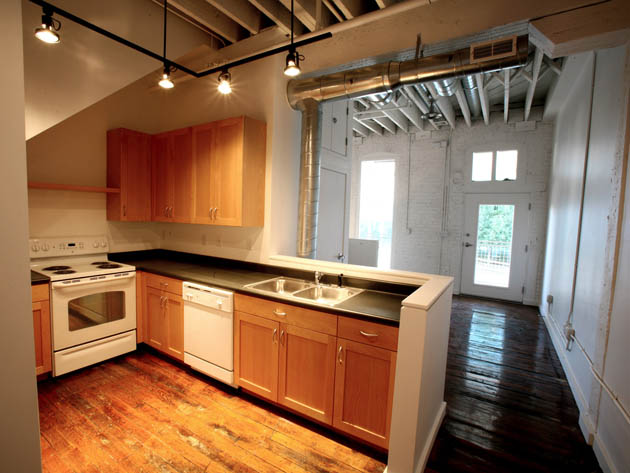
Artspace City Center (Salt Lake City, Utah) (see the following photos) was an adaptive re-use project. We turned a turn-of-the century retail warehouse building into artist studios and apartments:


Photograph used with permission from MJSA.


Photograph used with permission from MJSA.


Photograph used with permission from MJSA.


John R. Park Building – University of Utah (Salt Lake City, Utah) was an exterior restoration and seismic stabilization project of a 1912 building. It is also the marquee building of the University of Utah housing the president and vice-president offices. Photograph used with permission from MJSA.


Artspace Commons (Salt Lake City, Utah) is a new mixed-use development containing artist studios and low to middle income apartments. Sustainability is a key component for this project and we are attempting to achieve LEED Gold certification. Rendering used with permission from MJSA.

I am thankful for the opportunities and projects that come my way and appreciate the challenge each new project brings.

Soli Deo Gloria

Read More......

Thursday, July 29, 2010

Dordt Alumni in Design: Rick Hoogeveen


I graduated from Dordt in 2002 as an art major emphasizing fine arts and graphic design.

Here’s a fun little timeline about my first year after Dordt:
Sent out a number of resumes throughout my senior year and made a lot of “cold calls” without much success before graduating in May. Found out about a Team Leader position in the art department at The Mitographers, Inc. in Sioux Falls, South Dakota through a local staffing service, applied, interviewed and was hired. Moved to Sioux Falls on Saturday, June 8 and started my job June 10, 2002. The department was made up of four people including me. One team member had already put in her two-week’s notice the week before I started so she left soon after I started. I married my college sweetheart in mid September. The second team member from my department stayed on board until around October, but then decided to pursue his childhood dream of working in the movie industry. I then had the task of trying to train two new hires in late October to learn a job that I was still very much learning myself. The third and final original member of the department had made plans with his wife that when they were ready to start a family, he was going to be a stay at home dad and do freelance graphic design from home as well. So he was done working in my department at the end of December. So six months after I started I had gotten married and I had a brand new department! Quite the first year on my first job out of college!

I am still the Team Leader of the art department at The Mitographers, Inc., a printing facility located in an industrial park area north of the airport in Sioux Falls. Screen-printing is our main business but we have also gotten into and grown in the digital printing category as well in recent years. Our screen printing presses allow us to print large quantities of decals for machinery. The majority of our customers are OEM companies in the agricultural, industrial and lawn and turf sectors. Our digital presses have been helpful in allowing us to provide very low quantity orders to our customers when it would have been much more costly to try to print small runs on screen presses. Our large format digital presses also allow us to print large banners and many other materials that don’t work as well or fit in our screen presses like the ones shown here:


Many of the decals we print are safety or informational labels; ones the OEMs are required by law to have on their machines for the customer’s protection, like these:


We serve a variety of other customers on a custom basis as well. Here’s an example of a decal:


Read More......

Thursday, May 6, 2010

Dordt Alumni in Design: Sarah Franken


I graduated from Dordt in 2006 with a degree in Graphic Design and Art History. Almost immediately after graduation, I moved to Chicago to work as a graphic designer for The Field Museum. The Field Museum is one of the premier Natural History Museums in the country and is home to more than 20 million artifacts, the most famous of which is SUE, the largest, most complete T. rex fossil ever discovered.

There are currently seven full time graphic designers who make up the Graphic Design division of the Exhibitions Department. Our main job is to design and produce graphics for all permanent and temporary exhibitions developed by The Field Museum.


Since I started here, I’ve been involved in the design of over a dozen exhibitions, three of which are permanent. Most recently, I was lead designer on a temporary exhibition currently on display called, Lasting Impressions: Chinese Rubbings from The Field Museum. As lead designer, my work included comprehensive campaign design for the exhibition identity, all exhibition graphics and artifact identification. Depending on the size of the exhibition my work also includes exterior building banners, street banners, press kit materials, invitations, directional signage, and store merchandise. I’m currently co-designer on an upcoming permanent exhibition that will open in the fall of 2011.


Designing for exhibitions has been a challenging and exciting direction for my career. Environmental Graphic Design, as it’s known, is similar to print design but requires the additional understanding of architecture, interior design, landscape design, and industrial design. A successfully designed exhibition utilizes each of these parts to affect the space, the message and the visitor’s experience. As graphic designers it’s our job to organize the hierarchy of information in such a way that key messages are clear yet work with all other elements in the space and contribute to the overall mood. This can be a very challenging design task when scientists are dictating the content.


The exhibition design process is extensive (a permanent exhibition can take up to five years to develop and build). Being able to work, as part of a larger team is crucial. Coming to a final design solution that everyone agrees on requires a unified vision, patience, and several rounds of edits, but the pay-off in the end (watching visitors interact with your work and maybe even getting excited about DNA, for example), makes it all worth it.


As part of an in-house design department, my tasks also extend beyond designing exhibitions. On a daily basis I fulfill graphic design needs for various museum clients such as Education, Human Resources, Membership, Institutional Advancement, Guest Relations, and Marketing. Projects include event invitations, annual reports, educator newsletters, brochures, flyers, museum maps, educator guides and catalogs, signs, and banners.
I consider myself extremely fortunate to work at a museum. While at Dordt, people would ask me what I planned on doing with a degree in Graphic Design and Art History. At the time, I actually had no idea how these two branches would work together to form my career; I just knew that I loved both. I think it’s important to start with something that you love and follow it through. My career has plenty more paths ahead but I’m fortunate to have started where I did.


Besides my work at the Museum, I’ve had the opportunity to do some freelance work for a few non-profit organizations around Chicago. So far, these projects have included annual reports, announcements, signage and invitations. I’m hoping to expand my freelance work even more and can be contacted at thatsnicedesign@gmail.com.

Read More......

Thursday, March 4, 2010

Dordt Alumni in Design: Matt Van Rys


Matt Van Rys is our featured alumni this month. We put this piece together with elements from his portfolio website that he did especially for us to use. We’ve selected just a few examples and so for a greater effect, you may, visit the site itself. —editor

Matt writes the following:
I graduated from Dordt in 2004 with a degree in art, emphasizing Graphic Design. Two months later, I started work as a graphic designer at Creative Resource Inc. (a division of Diamond Vogel Paints) in Orange City, Iowa. I have worked at Creative Resource for nearly six years and I am a part of a three designer team managed by our Creative Director, Dordt Alumnus, Jamey Schiebout. My primary function is as a print designer, working on projects such as packaging labels, brochures, forms, point-of-purchase signage, advertising and posters.

In addition to print design, I have also done some web design projects. Some examples include the Diamond Vogel website, the Peridium Powder website, the Old Masters website and the Axis website. I have also more recently worked on other digital delivery graphics such as email marketing; web advertising and video designing and animation.

This is a screen shot of the Diamond Vogel website.

Other components of my work include some commercial photography, shooting video and also occasionally writing. Collaborating with fellow designers or suppliers is an important part of some larger projects. The most challenging component of being a graphic designer in my experience is tactfully steering a client or customer to an effective form of visual communication that also looks appealing. I feel that my liberal arts education at Dordt has given me the tools to examine a project from various perspectives, not just that of the artist, and more effectively execute a solution.

This is the cover to an Old Masters presentation folder we’re currently producing.

GIDI CLOTHING CONNEXION: Nigerian Independence Day 2010 Shirt Design Pitch 2.

In addition to my work at Creative Resource, I also do some freelance work, which has helped me develop a better understanding of the business side of graphic design.

Read More......

Saturday, January 30, 2010

Dordt Alumni in Design: Paul Ten Haken


My post-Dordt journey started in 2000 after graduating with a graphic design degree. I moved to Sioux Falls, South Dakota and worked for two dot-com startups right out of the gate. Two years and two failed ventures later, I had learned some valuable lessons about life, business ethics, and how to unsuccessfully run a small business.

I took a job with an interactive development shop called Electric Pulp as a project manager and absolutely loved it. It was here that I decided the online space was my ideal fit. I ended up getting my MBA realizing that I was moving away from design and more into the “business” of marketing. It was also during that time I moved into the healthcare marketing field, anxious for the opportunity to combine online/offline strategy into a cohesive effort.

After spending three years at Sanford Health managing their online efforts, I realized there was a significant lack of knowledge in the marketplace on how businesses could effectively utilize the web. A gaping void existed in our marketplace for an online strategy firm. After much prayer and consideration, I started Click Rain, Inc. — an online marketing firm – and have never looked back.
Click Rain helps organizations understand digital strategies and how to properly apply them to their core business. We like to say we help businesses market smarter. Traditional media is dying a slow death. That’s not a biased statement from an online marketing guy… it’s fact. Unfortunately, many businesses are slow to respond to this technographic shift. Our services – things like web development, search engine marketing, social media strategies, email, and mobile technologies – provide tangible ROI that demonstrate the value of a polished online game. That sounds really “salesy”, I suppose. But that’s what makes online marketing so great – the trackable, traceable nature of it.

Click Rain does a lot of work in the political arena and is currently entrenched in several heated races for 2010, including a U.S. Senate race in Kentucky that is getting national attention. We’re also doing work in financial services, healthcare, and hospitality, to name a few. You can view some of our client work here.

While my graphic design chops are pretty rusty, I do break them out on occasion when duty calls. I designed the Click Rain identity, but have since relied on the much more talented design skills of my team for our interactive design work. My day is spent more on the operations of a small business, business development functions, and managing the online strategies for our larger client accounts.

While I wasn’t sure where my graphic design degree would take me in 2000, I am thankful to have a design background when dealing with my staff and clients. I am also appreciative of the moral base instilled during my time at Dordt, which has helped me through some difficult business choices and created the foundation for my decision-making framework today.

Read More......

Sunday, January 3, 2010

Dordt Alumni in Design: Laryn Kragt Bakker

I graduated from Dordt in 1998, double majoring in art (graphic design) and computer science. I am currently Senior Designer at CEDC (The Center for Educational Design and Communication), based in Washington D.C., and I’ve been on the team here since 2003. Our tagline is “Social Justice by Design” because we are a non-profit that serves other non-profits in a number of ways, including through communications services such as web development, print design and logo/identity work.

The web was still quite new while I was a student, and the fields of graphic design and computer science didn’t cross in the classroom except in independent study. Since then, developments in the online world have exploded and there are a lot more ways to integrate the two.

I am an open source enthusiast, and over the last seven years I have expanded our web toolbox to include two robust and powerful content management systems (Drupal and Joomla). This allows us to design and build websites for our partners and give them easy access to add and edit their own content without having to deal with (and potentially mess up) the design of the site.

We also work on logo development and print design with our partners, creating everything from annual reports and brochures to posters and newspaper advertisements. One of the benefits of working for a small organization is that I generally get to be involved in the projects from start to finish, from the initial meetings with our partners through concept development, design and completion.

I also do some personal projects and some freelance design for entities that don’t fall under CEDC’s mission. I recently painted an original illustration for the cover and designed the cover and interior for my novel (Clutching Dust and Stars), which was recently published by *culture is not optional.

When you design, you have been hired to communicate something specific; you aren’t just creating art for art’s sake. I remember leaving Dordt with my degree in hand and being unsure where it would take me since I had no desire to head off to a traditional design firm and hawk Coca Cola or SUVs. I wanted to be sure that my energy was being spent and my skills being used in ways that were beneficial to others. I am grateful to have landed at CEDC and to be able to partner with such a variety of groups that are doing important work in areas of social justice, advocacy and education.

See the images below for a few examples of projects I’ve designed (and developed, in the case of websites). Click the images to go to a more detailed description of the project.


Clutching Dust and Stars. The cover of my novel, recently published by *culture is not optional, with an original illustration and design.


Avaaz.org: Hello, Kiddies. A “Hello Kitty” parody advertisement for Avaaz.org which ran full page in all editions of the Financial Times worldwide to call out the leaders who are blocking progress on the climate change issue.


Education for Justice. A member-based website with lesson plans and educational resources about Catholic Social Teaching.


CLINIC Legal. A member-based website designed to enhance and expand delivery of legal services to indigent and low-income immigrants.


CEDC.org. Our own website, which had been badly in need of redesign. I rebuilt it with a more colorful palette to represent the diversity of our partners and our projects. I also focused on Search Engine Optimization and we have definitely noticed an increase in our web traffic and digital inquiries.

*Laryn Kragt Bakker graduated from Dordt in 1998. He can be found online in a variety of places: his personal design site, his work blog, his informal blog, on Twitter, on Facebook, and LinkedIn.

Read More......

Saturday, December 5, 2009

Dordt Alumni in Design: Jamin Ver Velde


An example of Jamin Ver Velde's forté for Dordt College’s graphic identity and sports promotion.

We recently invited Jamin Ver Velde to be our monthly featured alumni and we appreciate that he took time to send this piece to us. In addition to being the graphic designer on staff at Dordt, Jamin has helped advise students working on Signet, which is Dordt's yearbook. In addition, in 2008, he along with Jamey Schiebout were symposium presenters at Dordt — in an event affiliated with an alumni graphic design exhibition — Editor.

After graduating from Dordt in 1999, I eventually followed Jamey Schiebout (see September alumni post in DC AIGA) in the newspaper business, unknowingly filling his exact position after he moved on. For me, also, it proved to a very appropriate place to get a good start in the graphic design world. Within the weekly routine there was enough variety, creativity, and standard to keep me hungry for more. I was given a lot of latitude in the creative process because of the nature of the industry. Working for the media necessitated the ability to work under non-flexible deadlines and, therefore, minimal approval process. More often than not, the time crunch proved to be more of a stimulus for creativity rather than a hurdle. I was fortunate to work for a rare breed of small town newspaper that valued creative design.

After two and half years in the newspaper industry, I moved into my current full time position at Dordt College working for the Advancement Office in the public relations and marketing sector. After being told that I needed to come on board as soon as possible, I caught up on the work within three days. This was certainly a new (and confusing) situation for me. I sought out more ways to use my interests for the benefit of the college. I saw a need for a much better photo archive and prompted the office to purchase a couple of cameras to enhance the graphic materials while also serving to document the college’s history. I made a very conscious effort to unify the brand identity of all the Dordt materials. I’ve always been a big believer that repetition breed’s familiarity which breed’s trust, so priority number one was to standardize the representation of the Dordt logo.

Within a year and a half at Dordt I had a full plate, so my focus turned from looking for more ways to help out to looking for which ways to help out. I concentrated more on adapting my position and skill-set to evolve as the needs evolved or thought it should evolve. I dabbled in web-related applications such as Flash and Dreamweaver, but realized my passion remained in logos, brand identity, and overall creative direction. My passion for this — inspired me to join forces with the webmaster at Dordt in a new part-time venture where we complemented each other extremely well. Moonlighting as Brand New Graphics, we started to take on side website jobs. I continued to also do print and logo design as well, but the demand for websites quickly took center stage for our business. Today, Brand New Graphics averages about three websites designed and developed every two months. Defining what our business is in one sentence I would say, “We are a creative branding agency built around website development for small to medium businesses.”


Here are two examples of websites designed by Brand New Graphics and indicate the range of clients they have served. Above is the “Timothy” website for Calvin Seminary and a website for the Ridge Golf Club, a public course.

As my career continues to evolve, I’ve been increasingly appreciative of a liberal arts education that recognizes the overlapping spheres of academia and knowledge. As a graphic designer and small (okay, very small) business co-owner I regularly draw upon business and marketing principles, psychological considerations, social situations, English and creative writing, public relations, and others. The older I get, the more I know I really don’t know. I truly cherish learning more every day, and still look forward to going to work every single day.

Read More......

Saturday, October 10, 2009

Dordt Alumni in Design: Ben Meyer, will be at Dordt to discuss his computer animation work on October 23, 2009.


The Dordt College AIGA student group is delighted to announce that Dordt alumnus, Ben Meyer (class of 1994) is scheduled to present and discuss his computer animation work with students and faculty on Friday, October 23, 2009 at 1:30 to 3p.m. in the digital media lab, 1310. This is a continuation of the AIGA student group’s initiative to host monthly design professionals as guest speakers and visting designers. All those who are interested are invited to attend this event.

Meyer is assistant professor of digital design at The University of Cincinnati (UC), in the College of Design, Architecture, Art and Planning (DAAP). Ben specializes in graphic design and computer aided animation, having worked in industry for international clients and having previously taught graphic design at Montana State University. The range of Meyer's experience includes development of animated children’s games for Hasbro, Inc., for Warner Brothers Studios as well as other clients. In addition, he has provided design expertise to such clients as Hewlett Packard Co., Motorola, Inc., Houghton Mifflin Co., the Museum of Jewish Heritage (New York City), and to PBS, for the channel's “Terra” program.

In terms of his own research, Meyer hopes to pursue scientific visualizations — computer animations related to medical research and forensics.

He is a faculty member in the Digital Design program, in which he’s responsible for most of the advanced motion graphic, and interaction design courses. Graduates from this program pursue careers in interface design, motion graphics, human factors, and information design. Ben stresses the import of giving students a strong foundation in type, composition, form, and animation.

As a side, DAAP is frequently ranked as one of the best art and design schools in the nation. Recently, Business Week ranked their design programs as one of the world’s elite. I.D. (International Design) Magazine listed UC among the globe’s Top 10 design schools. (Information from the UC website).

Read More......

Tuesday, September 29, 2009

Dordt Alumni in Design: Jamey Schiebout


Jamey Schiebout, Creative Director-Creative Resource Inc. (Diamond Vogel Paints). Pictured above are page spreads from “The Miracle of Paint” and “The Miracle of Color” brochures.

I graduated from Dordt College in 1998 with a degree in Graphic Design. I started out by working in the newspaper industry. This was a great starting place for me as it instilled in me value of good page layout and working under very tight deadlines. From there I started as a designer working for a large corporation. As the only designer it was up to me to handle all aspects of print and web based marketing. Currently, I am employed as Creative Director at Creative Resource Inc. an in-house ad agency for Diamond Vogel Paints in Orange City, Iowa. At Creative Resource I oversee three full-time graphic designers. It is my responsibility to make sure all jobs are done on time and that projects meet the standards set by Diamond Vogel and other customers. I also need to keep all equipment up to date and make sure we operate efficiently and effectively. We work daily with the promotional items and materials including all print material, store displays, advertising, sales presentations, label setup and design, web design, photography, video and whatever is asked of us. It is a great position to be in as it opens me up to a large variety of design mediums and options.

Shown above are some design options I have worked on in the last couple of years. One of those projects was “The Miracle of Paint” and it’s sister brochure “The Miracle of Color” for Diamond Vogel. This was a corporate promotional piece that demanded a lot of creativity and time. I wanted to take the paint out of the can and show it in a different way. We did this by basically showing just paint by itself or with people and everyday objects in a way never seen before. Included in the design team of such a large piece were graphic designers, creative writers, photographers and video teams. It was my job to make sure that the entire team involved worked together through completion and then create a final design that would be seen as both fun and eye-catching. The project went over extremely well and continues to be used as a corporate marketing piece. The entire “Miracle of Paint” and “Miracle of Color” projects can be seen on the web at: www.diamondvogel.com.


Menu Cover design for
Blue Mountain Restaurant, Orange City, Iowa. This is an example of 0ther projects that I have done at Creative Resource or as freelance work.

Read More......

Saturday, August 29, 2009

Dordt Alumni in Design: Sarah De Young


Illustrated above is Sarah De Young’s web banner design for Replacement Press. A recent news release announced that Andrew and Sarah De Young of St. Paul, Minnesota have partnered to start Replacement Press. This new venture seeks to cultivate the literary voices of the next generation by publishing culturally engaged fiction by new and emerging writers.

Sarah (née Versluis) and her spouse Andrew De Young, both graduates of Dordt College’s class of 2005, have resided in St. Paul since 2006.

According to Sarah, who’s a contract graphic designer, “I’m a versatile graphic and production designer… who loves the form, function, and culture of design. For the past five years, I’ve provided brand and design solutions to businesses such as Target Corporation and for non-profits like the Chicago Symphony Orchestra. I thrive in fast-paced environments and take a thoughtful, expressive approach to the creative process.”

In addition to Target in Minneapolis, her client list includes Wilberforce Academy, an emerging international higher-education organization, as well as the MacLaurin Institute, which are both at the University of Minnesota, Minneapolis. Sarah is currently working as a graphic designer with Ekcetra.

Again, referencing her website, Sarah highlights her professional skills as delivering polished designs and projects to present at creative reviews. She’s also flexible and dynamic and able to adjust to shifting priorities. And she’s an effective team member who collaborates productively with partners and teams throughout the creative process. All of these characteristics profile what many practicing designers should demonstrate in today’s business situation.

    Here is a page from Sarah’s portfolio.

Read More......