
 Cross-cultural poster exhibit on display from now until February 11.
Sioux Center, Iowa: A new art exhibit is on display in the Dordt College gallery. The display, titled, “Woman,” is a series of posters examining a variety of different cultural depictions of womanhood.
Dordt art professor David Versluis first learned of the student-designed poster exhibit at a conference in Chicago, where his friend, Purdue professor Dennis Ichiyama, showed him the exciting new project.
The posters explore three distinct themes: Woman and Society, Woman and Family, and Great Women in History. The images are striking and evocative, and particularly poignant at our current moment in history.
This display was the result of a collaboration between Purdue University in Indiana and the Institute of Design in Havana, Cuba. Ichiyama visited Havana in 2015 and met with the Insitute’s administrators. During this meeting, they discussed the possibility of a joint project between the American and Cuban universities. The two institutions worked together to create a series of posters, which were then printed in the US by Xerox Corporation. But due to constraints from the 1960’s embargo on mailing, Ichiyama had to hand-deliver the posters to Havana, in time for the April 2016 exhibition.
This collaboration between the two countries is not merely artistic. It is historically momentous, as it represents attempted reparation of the rift between the United States and Cuba. American tourism is currently still a violation of Cuban federal law. President Obama’s 2016 visit to Havana was the first presidential visit to Cuba since Calvin Coolidge, 88 years prior. Although Obama’s visit set a precedent for rebuilding these international divides, the relations between the two countries remain strained. So artistic and scholarly collaborations, such as this poster display, are particularly meaningful in the current political climate.
The posters also have cultural significance. Cuba has made strides forward in the struggle to overcome the objectification of women, as was sometimes seen in traditional Cuban poster art. This new display represents a way of preserving this facet of the country’s cultural heritage, while reforming and reexamining its content.
A new set of these printed posters was produced specifically for the Dordt art gallery by Versluis and Ichiyama. The exhibit is free and open to the public. It will be on display at the Dordt College art gallery until February 11.
Thursday, January 11, 2018
Cuban-American Art Collaboration, “Woman,” on Exhibit at Dordt College

Sunday, November 12, 2017
David Versluis—New work: Fulgurite

© David Marc Versluis
Fulgurite (vitrified silica caused by lightening striking sand or soil)
2017
Aluminum, powder-coated
13h x 7w x 7d inches (33 x 18 x 18 cm)
Wednesday, November 8, 2017
Dordt Hosts Art Reception on the Mathematical Art of Yeohyun Ahn, Nov. 13

Image: ©Yeohyun Ahn, all rights reserved
South Korean artist combines code, typography, and mathematics with calligraphy.
Sioux Center, Iowa: Beginning November 2, a new art exhibition will be on display in Dordt’s Campus Center Gallery. The artwork is by Yeohyun Ahn, South Korean artist and graphic designer.
Ahn is an award-winning typographer and visual designer. She is also an assistant professor of communication at Valparaiso University in Indiana. Previously, she taught at Chicago State University, the School of Art Institute of Chicago, and did freelance graphic art for the New York Times. Her artwork has been featured in the Washington Post and the New York Times, as well as in art galleries in South Korea, Japan, and the United States.
Growing up in South Korea, Ahn was first drawn to typography by learning calligraphy from her grandparents. While her parents encouraged her to study computer science, Ahn eventually decided to pursue an MFA in graphic design.
Her artwork is a representation of “cybernetic ecology”: the harmonization of the human and the machine. Ahn uses computer coding and mathematical algorithms to create abstract representations of letters and words, which simultaneously evoke cutting-edge technology and the natural or religious. To create her works, Ahn utilizes a variety of computer software, including Adobe Photoshop, Illustrator, InDesign, and “Processing” – a more recent program that integrates coding and artwork.
“[My pieces] convey diversified visual messages inspired by nature,” says Ahn, “addressing environmental issues such as green design, healing through art, and exploring philosophical and religious interpretations regarding life, death and love.”
Two of Ahn’s collections: “The Bible + Code” and “O Antiphones + Code” will be exhibited in the Campus Center Gallery at Dordt from November 2 until the end of December. “The Bible + Code” is inspired by Scriptural imagery, and “O Antiphones + Code” was created for the 2016 Advent Vespers booklet for the Chapel of the Resurrection at Valparaiso University.
A reception will be held at Dordt’s Campus Center Gallery on November 13, from 6:45-8:00 p.m., with a discussion at 7:00 p.m.
Thursday, September 7, 2017
33 Contemporary Gallery, Chicago: SKETCHBOOK show

33 Contemporary Gallery, Chicago:
The show will open on September 15 and run to October 14, 2017.
These are the artists who are participating in the SKETCHBOOK show:
Juarez Hawkins,
Cesar Conde,
Charlene Moy,
SPIKA,
Leisa Shannon Corbett,
InJung Oh
, Sarvin Haghighi,
Victoria Szilagyi
, Janet Glazar,
Joanna Partyka,
Sally Ko,
Laleh Motlagh,
Carrie Baxter,
Bojana Ilic-Bojitt,
Amy Hassan,
Gillian Kennedy Wright,
Marilyn Walter,
Victoria Fuller,
Yvonne Beckway,
Sergio Gomez,
Romana Brunnauer,
Elisa Boughner,
Michael Coakes,
Anke Korioth
, Beth Lowell,
Victoria Clarke,
Peggy Shearn,
David Versluis,
Lynn Garwood
, Melynda Van Zee,
N Masani Landfair,
Kelly Mathews.
Tuesday, August 15, 2017
Dordt College Campus Center Gallery through September 30: Dan Addington — Monumental Heart: Encaustic and Mixed Media Paintings


Dan Addington Artist statement
In the last ten years, travels in Europe and Ireland have had a profound visual effect on my work. Upon returning from that first trip through Ireland, I began a series of paintings initially inspired by feelings and imagery experienced there. These influences were coupled with my own already established love of medieval and gothic forms, historical European religious subject matter, and Irish history. At this time I also began to aggressively explore the use of alternative, often organic materials like wax, tar, wood, and fabric to achieve a more elemental and tactile connection with the work. The exploration of ideas about memory, history, and the passage of time have become an important part of this process.
My paintings often include combinations of anatomical imagery, memorial sculpture, romantic symbolism, and religious iconography. The works are created using deep supports, like boxes, that stand out from the wall and assert themselves in the viewer’s space. In many cases, the physical qualities of the work are meant to suggest the physical weightiness associated with monuments and memorial sculpture. Collaged materials, including heavy fabrics and printed matter, contribute to the initial surface of the work. After this weathered, heavily worked, abstract surface is established, it is sealed in a layer of beeswax, and the more figurative elements of the imagery are rendered in tar and varnish. The organic qualities of the wood, wax, and tar communicate a feeling of timelessness. I believe that the processes of building, weathering, eroding and layering are important to the work’s identity — it creates a history that can be traced, investigated, and experienced by the viewer. The materials and processes used emphasize the paintings as visceral objects with an evocative physical presence. Often, these materials are meant to recall and engage the physical body, and with the accompanying image, evoke a meditational response from the viewer. Through a mixed use of painterly languages, these works explore the nature of mortality, express a sense of loss, and address mankind’s desire to locate spiritual meaning.
About Dan Addington
Dan Addington is an artist and gallery owner who has been working with wax since 1989 and exhibiting encaustic work professionally since 1992. Dan is the owner and director of Addington Gallery, located in Chicago’s historic River North art district. Read More......
Saturday, June 17, 2017
The systematic formation of circles and the structure of the conceptual line

Alden Dow, principal architect: Midland Center for the Arts, Midland, Michigan.
The encounter of circles: Dow groups together five circles and systematically overlaps them to produce what Wucius Wong calls a super-unit form.


Sunday, June 4, 2017
The Wall of Respect: Vestiges, Shards and the Legacy of Black Power—Chicago Cultural Center
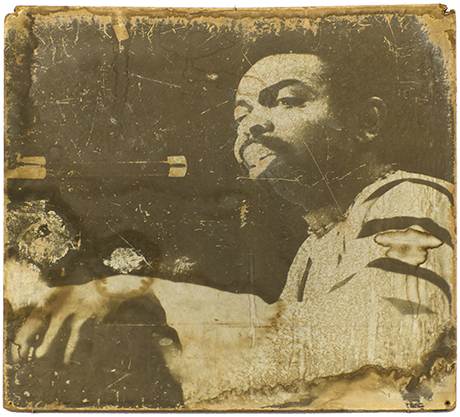
Darryl Cowherd
Portrait of Amiri Baraka, 1967
Gelatin silver print on board
Anonymous loan, Chicago Cultural Center
below: The Wall of Respect, 1967–71. Public Artistry at 43rd & Langley, Chicago—mural destroyed in 1971.


Roy Lewis
High Priestess of Soul Sunday Morning Visit to the Wall of Respect, 1968
Digital Print
Courtesy of Roy Lewis
